
“Actual productivity = potential productivity – coordination & motivation loss” Rich Kalgradd However, productivity is not the most important factor in team or company success. Like running a race, you will not win by running the fastest in the wrong direction. If you have chosen the right direction, .e., made a good decision about what […]
Category Archives: Blog
 November
01
November
01
Product leadership part 1 – making great decisions
posted by Max
Product Leaders (PL) need to ensure that teams are building the most valuable experiences for customers and the company. To do this, you need to find the right problem and then find a pragmatic solution. Whether the solution should be executed, will depend on whether it is more or less valuable than your other options. Finding […]
 November
01
November
01
What does a product leader do?
posted by Max
Product leaders delight customers in hard-to-copy, margin-enhancing ways. Gibson Biddle, VP Product Netflix In my experience product leaders (PL, may also be called product owner or managers) lead the teams that build amazing experiences for customers. PL’s understand existing and target customers, the companies strategic context and then translate this into a prioritised list of […]
 September
13
September
13
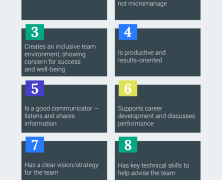
What leaders can learn from Google’s Project Oxygen
posted by Max
Google ran an experiment to prove that managers are unhelpful. The found something different – the right managers can be very helpful. Google established the 10 Oxygen behaviours of Google’s best managers (behaviours 3 and 6 have been updated and behaviours 9 and 10 are new): Is a good coach Empowers team and does not […]
How to scale product teams
posted by Max
One of the most contentious discussions I have with founders, CEOs and CPOs is how to structure product teams when a company grows. While I think this is important, I think it misses the wider point. Four things break when you get bigger, People, Process, Technology and Culture. Each of these will break at different […]
 August
24
August
24
Intuition in decision making, lessons learnt from the British Army
posted by Max
In 2015 I wrote a dissertation on military decision-making to complete my MBA. You can find the executive summary below, and the full dissertation at the link at the bottom of the page. This dissertation was designed to be an independent analysis, and should not be seen as a critique of the military (in which […]
 August
16
August
16
Leadership hack 025 – quantative data tells you what, qualitative tells you why
posted by Max
We now have access to too much information rather than too little. Making great decisions requires an understanding of the limitations of data and the importance of analysis and dialogue. Modern digital products have no little limits on data you can collect. Here are a few examples: How quickly a user moves a slider when selecting a loan size […]
July
23
What leaders can learn from Google’s Project Oxygen
posted by Max
Google ran an experiment to prove that managers are unhelpful. What they found was the opposite – that managers are helpful. Google established the 10 Oxygen behaviours of Google’s best managers (behaviours 3 and 6 have been updated and behaviours 9 and 10 are new): Is a good coach Empowers team and does not micromanage […]
 July
20
July
20
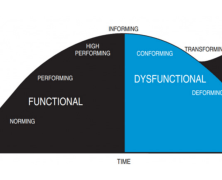
Leadership hack 022 – it’s OK, teams change
posted by Max
I have found it helpful to use Tuckman’s (1965) stages of team development (expanded by Edison) to show how teams change over time, and it is normal for teams to dip and rise in performance.
 July
06
July
06
Leadership hack 020 – how to help new team members hit the ground running
posted by Max
Much has been written about how to build and maintain high-performing teams (see here and here). What is less well covered is how to bring on new members into a high-performing team. When someone new joins the team, you are probably thinking about the following: Getting them up to speed as quickly as possible Making the experience great so […]
 June
08
June
08
What I learnt from the Oxford Said FinTech Course – part 1
posted by Max
I spent the last ten weeks taking part in the Oxford Siad Business School FinTech course. The course was split into ten modules that cover the various aspects of the FinTech landscape. In a series of blogs, I aim to collect my thoughts and share what I learnt. In this first blog, I have tried to […]
 February
19
February
19
Leadership hack 019 – feedback
posted by Max
Anders Ericsson found that truly world class performers invested more time in deliberate practice (see his seminal paper) than their less successful peers. Anders defined deliberate practice as: “repeated experiences in which the individual can attend to the critical aspects of the situation and incrementally improve her or his performance in response to knowledge of results, feedback, or both from a teacher.” The importance of feedback […]
 getting better every day
You must be logged in to post a comment.