
Netflix is now the global superpower of streaming. How did they get there, and how did they out-compete Google and Amazon? Patty McCord in her book ‘Powerful’ suggests that the Netflix culture and a strong HR team, under her guidance, played an enormous part in that success. In the book, Patty divides advice into nine […]
Author Archives: Max
 October
18
October
18
What you could learn from ‘Drive’ by Daniel Pink (2011, 256 pages)
posted by Max
Why do people leave one company for another? Why do people dedicate their lives to work or the pursuit of a life-long goal? Motivation theory has evolved a long way since Maslow’s hierarchy of needs (see here). In his book ‘Drive’ Daniel Pink argues that there are three drivers of motivation: Autonomy Mastery Purpose Autonomy […]
 October
05
October
05
What you could learn from Barbra Minto’s The Pyramid Principle (2009, 172 pages)
posted by Max
Few books are required reading at McKinsey, the Pyramid Principle is one of the books that most people read during their time. Consulting and leadership are about convincing others to change. While a leader often has positional authority, consultants do not. McKinsey consultants found that Barbar’s framework helped them influence clients by building a well structured […]
 September
28
September
28
What you could learn from ‘Thinking fast and slow’ by Daniel Kahneman (2012, 300 pages)
posted by Max
What is intuition? How do humans think? Are humans rational or irrational and can we predict them? In the past economist built models that assumed that human beings are perfectly rational (what behavioural scientists joking refer to as ‘Homo Economicus’). Daniel Kahneman, a Noble Prize-winning author, showed that Homo Economicus does not exist and that […]
 September
14
September
14
What you could learn from ‘Drive’ by Daniel Pink (2009, 208 pages)
posted by Max
You can buy ‘Drive’ here on Amazon UK (all proceeds go to site upkeep and any extra go to veteran charities).
 September
13
September
13
What leaders can learn from Google’s Project Oxygen
posted by Max
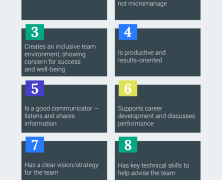
Google ran an experiment to prove that managers are unhelpful. The found something different – the right managers can be very helpful. Google established the 10 Oxygen behaviours of Google’s best managers (behaviours 3 and 6 have been updated and behaviours 9 and 10 are new): Is a good coach Empowers team and does not […]
 September
07
September
07
Leadership hack 026 – the three steps to mastery
posted by Max
“Learn to ski on piste before you ski off-piste” Army Ski Instructor One of the biggest problems I face when teaching and coaching is that people often try to do too much too soon. Without a mastery of the basics I find some of the following problems occur: Paralysis of decision-making. When someone is […]
 September
06
September
06
My top business of 2017
posted by Max
I try to read a book a week. In 2017 I only managed to read 21, well short of my goal. To be fair in 2017 I left McKinsey to put myself through a Coding Boot Camp and built a bank. Of the 21 books I did read, these are my top five: How Google […]
How to scale product teams
posted by Max
One of the most contentious discussions I have with founders, CEOs and CPOs is how to structure product teams when a company grows. While I think this is important, I think it misses the wider point. Four things break when you get bigger, People, Process, Technology and Culture. Each of these will break at different […]
 August
24
August
24
What you could learn from ‘Change by Design’ by Tim Brown (2009, 242 pages)
posted by Max
Customers are changing. Brands and companies have repeatedly experienced shifts from consumption to participation. Many products are now co-created with customers, be it choosing the fabric and colours on your next pair of trainers, or curating and sharing playlists on Spotify. Tim Brown in his book ‘Change by Design’ suggest that companies need to adapt by focusing […]
 August
24
August
24
Intuition in decision making, lessons learnt from the British Army
posted by Max
In 2015 I wrote a dissertation on military decision-making to complete my MBA. You can find the executive summary below, and the full dissertation at the link at the bottom of the page. This dissertation was designed to be an independent analysis, and should not be seen as a critique of the military (in which […]
 getting better every day
You must be logged in to post a comment.